Applied Architecture View
This page documents the applied systems architecture and deployment boundaries for this domain. For the canonical research profile, theoretical foundations, invariant equations, and evidence boundaries, inspect the primary research profile:
👉 Electrostatic Torque Fabric (ETF) Research Profile
Domain Problem
Direct kinetic contact in mechanical power transfer causes degradation, friction, and inefficiency in precision instrumentation. Traditional torque translation systems face limitations in high-load industrial environments where structural wear undermines field stability.
Applied Research Boundary
Electrostatic Torque is treated here as a bounded applied-science concept, not as a registered motor, actuator, propulsion system, or industrial product. The page may discuss conceptual relationships among charge, field, geometry, torque, and control, but it must not assert verified performance without documented independent validation.
Theory Derivation
This fabric is treated as an applied deployment expression mapped through the operational framework:
| Layer | Function |
|---|---|
| SFR | Defines the relational and invariant frame. |
| DFT | Translates the frame into digital-system architecture. |
| GILC / UKC | Provides institutional and corpus governance. |
| KBI / CodexStation | Provides execution, validation, and runtime discipline. |
| Applied Fabric | Localizes the architecture into a specific domain. |
Formal Kernel
The non-contact torque parameters are defined by the bounded energy-system model:
Where:
represents the gap and spatial input constraints. represents the governed electromagnetic energy field geometries. represents the state of the coupled mechanical mediums. represents microsecond phase array control conditions. represents the proposed bounded output ensuring frictionless momentum conservation.
Established-Domain Grounding
This route should be read in relation to established domains such as materials science, plasma physics, electromagnetism, control theory, industrial systems engineering, measurement, and safety engineering.
These domains provide comparison and vocabulary. They do not validate the authorial applied fabric or any proposed device concept.
Proposed Fabric Model
Electrostatic Torque defines a deployment paradigm for mechanical translation without direct kinetic contact. By leveraging governed electromagnetic field geometries, this bounded energy-system model explores highly efficient power transfer suitable for precision instrumentation. It employs theoretical phased array emitters coordinated by logic kernels to dynamically adjust torque ratios, aiming to keep electrostatic fields topologically locked regardless of external load spikes.
Engineering and Safety Boundary
Independent review required
This page presents an authorial applied-science and systems-architecture model. It does not assert registered device performance, operational safety, laboratory replication, regulatory approval, industrial readiness, energy output, or deployable engineering status.
Any energy, plasma, materials, manufacturing, infrastructure, or industrial application requires independent experimental validation, safety review, engineering audit, regulatory assessment, and domain-specific professional oversight.
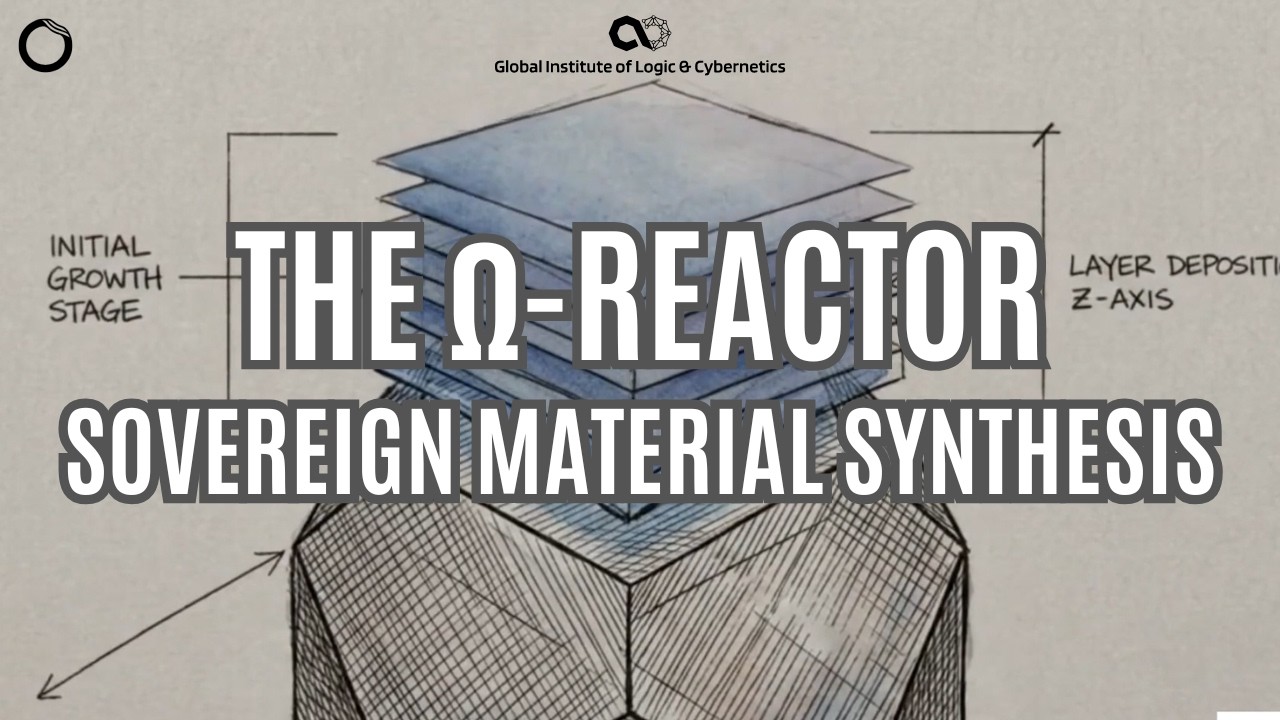
Media Briefing
This applied fabric supports the following domain-specific operational briefings:
Media briefings are explanatory artifacts. They do not replace experimental validation, engineering review, safety certification, or peer-reviewed publication.
Bibliographic Grounding
(Pending non-contact torque and electromagnetic regulation references.)